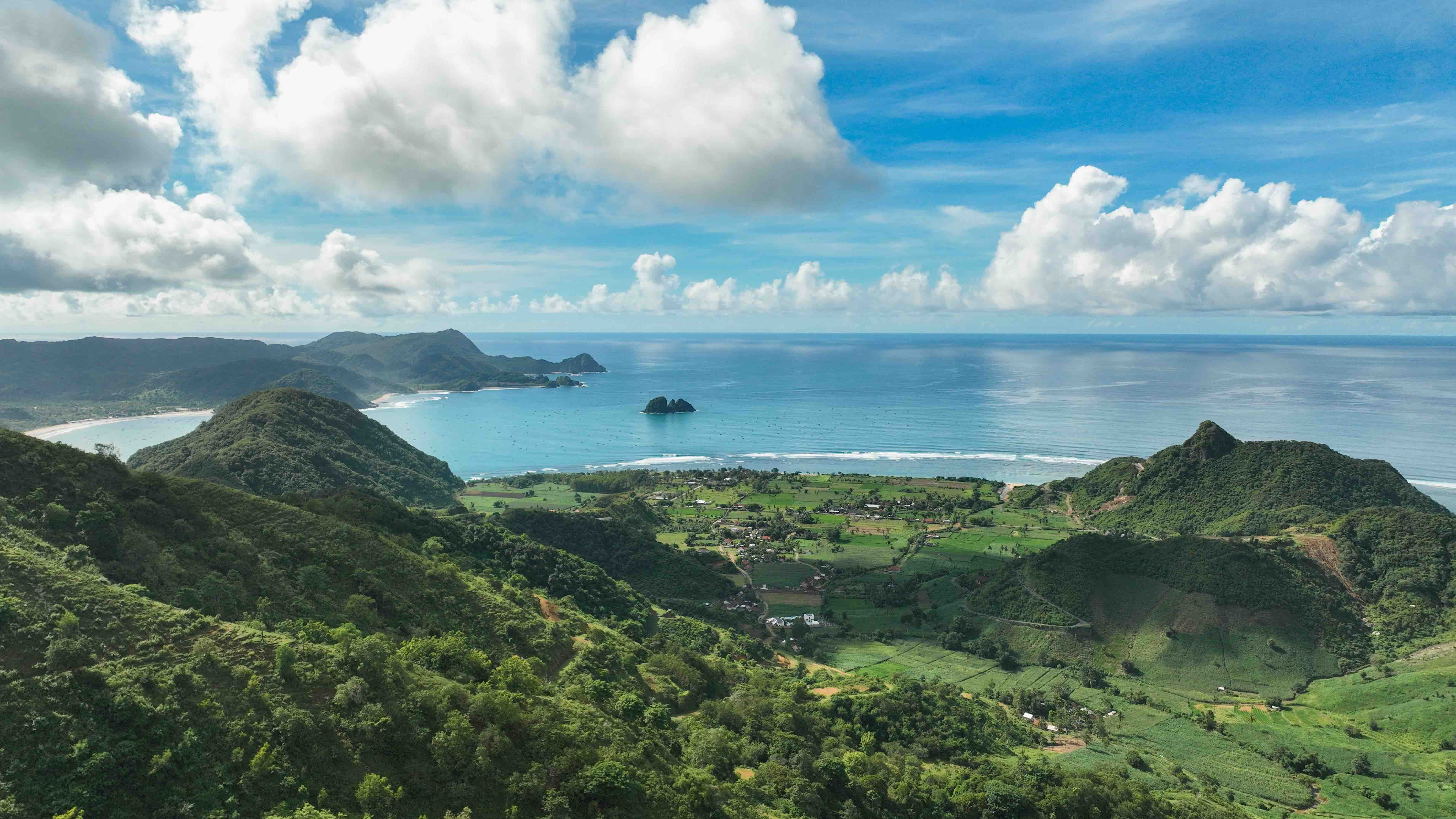


There is something about travelling with a family that changes the way you experience a place.
The pace becomes slower. A beach is no longer simply a beautiful stretch of coastline; it becomes a place to spend an entire morning. A short walk can become an afternoon because there is something interesting in the trees, a stream to cross, or a small warung where everyone wants to stop for a drink. The best days are often the ones that were never planned too tightly.
Lombok lends itself naturally to this kind of travel.
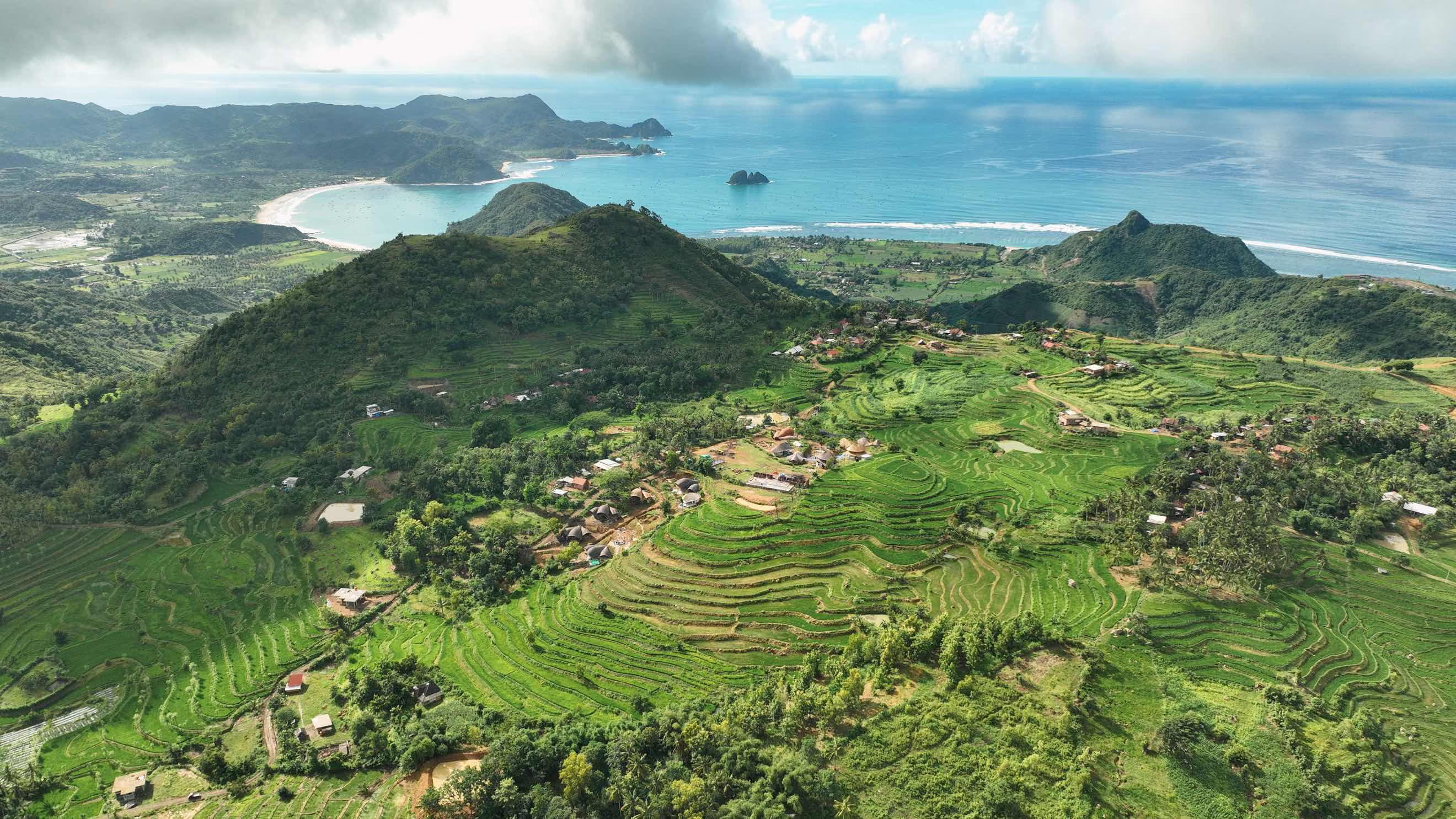
The island offers a remarkable variety within relatively short distances: beaches and surf breaks along the south coast, waterfalls and forest around the foothills of Mount Rinjani, rice fields and traditional villages inland, and quiet roads connecting them all. Mount Rinjani itself rises to 3,726 metres and forms the centre of a much larger landscape of forests, villages, waterfalls and agricultural land.
For families, this means a holiday does not need to revolve around one attraction. It can simply be built around being outside, moving between landscapes, and allowing enough time for children and adults to experience the island at their own pace.
Read more: Which Is the Best Season to Visit Mandala Eco-Resort?
Start with the Sea
For many families, the easiest introduction to Lombok is the southern coastline.
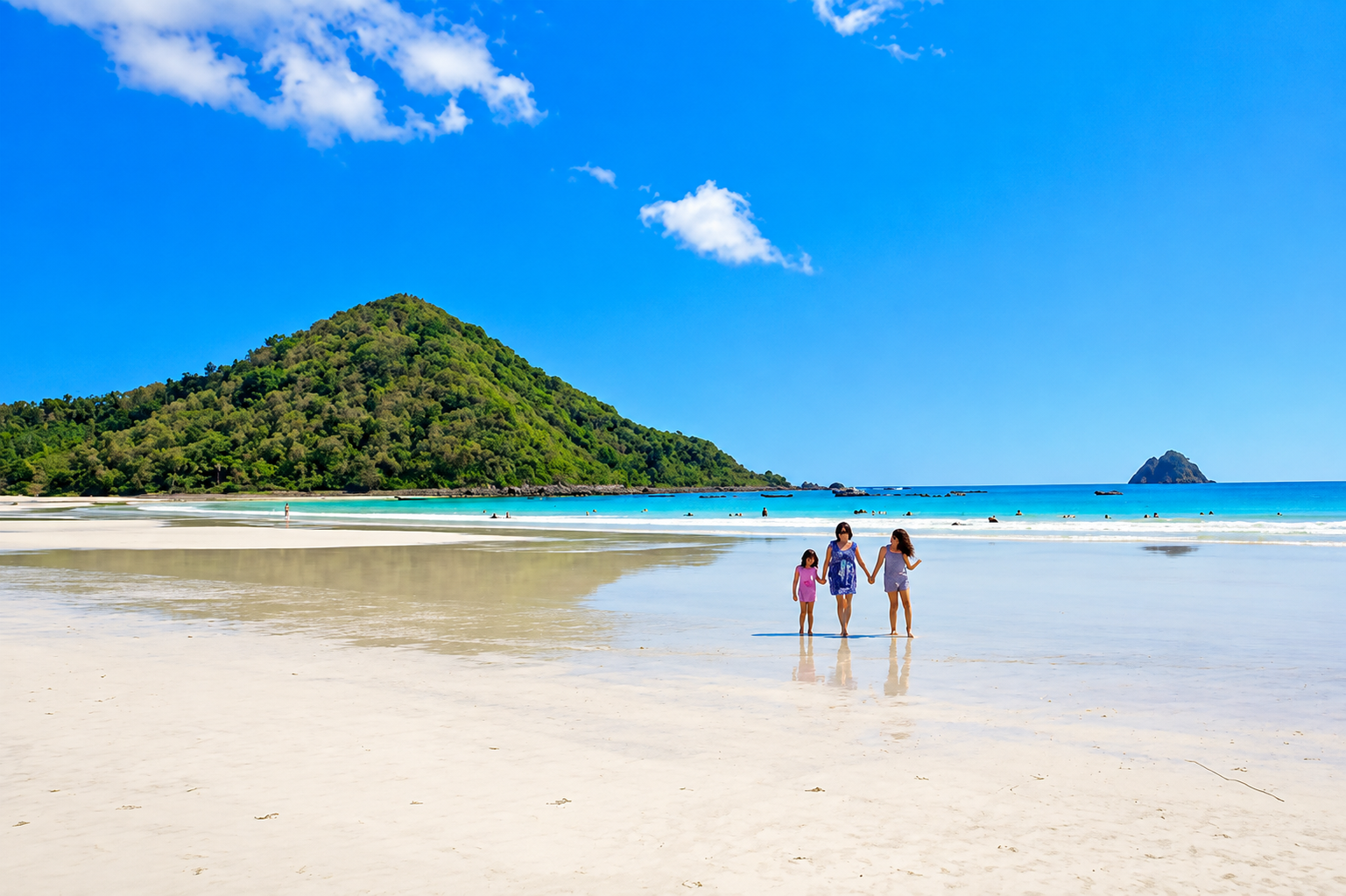
Around Kuta and Mandalika, the landscape is defined by a series of beaches separated by low green hills. Tanjung Aan, Gerupuk, Seger, Serenting and the beaches around Kuta each have a slightly different character, which makes it possible to spend several days exploring without feeling as though you are repeating the same experience.
Tanjung Aan is particularly suited to an unhurried family morning. Its two bays create different conditions along the shoreline, while the surrounding hills offer an easy change of scenery when the children have had enough of the water. The sand itself is distinctive, formed partly from naturally weathered coral and often described for its peppercorn-like texture.
Then there is surfing.
Lombok's southern coast has become increasingly known for its waves, but surfing here does not have to mean watching experienced surfers from the shore. Selong Belanak is one of the more accessible places for beginners, with a broad sandy beach and gentler waves that have made it a popular place to learn. Local surf schools operate along the beach, and lessons can become one of those unexpectedly memorable family experiences: everyone is wet, tired, slightly sunburned, and usually very pleased with themselves.
For older children or more experienced surfers, the options become wider. Gerupuk Bay has several breaks reached by boat, while other southern beaches offer more challenging conditions. The important thing is not to treat every beach as interchangeable. Waves, currents, reef and beach conditions vary considerably, so choosing the right place for each member of the family matters more than simply finding the most famous surf spot.
Let the Children Set the Pace
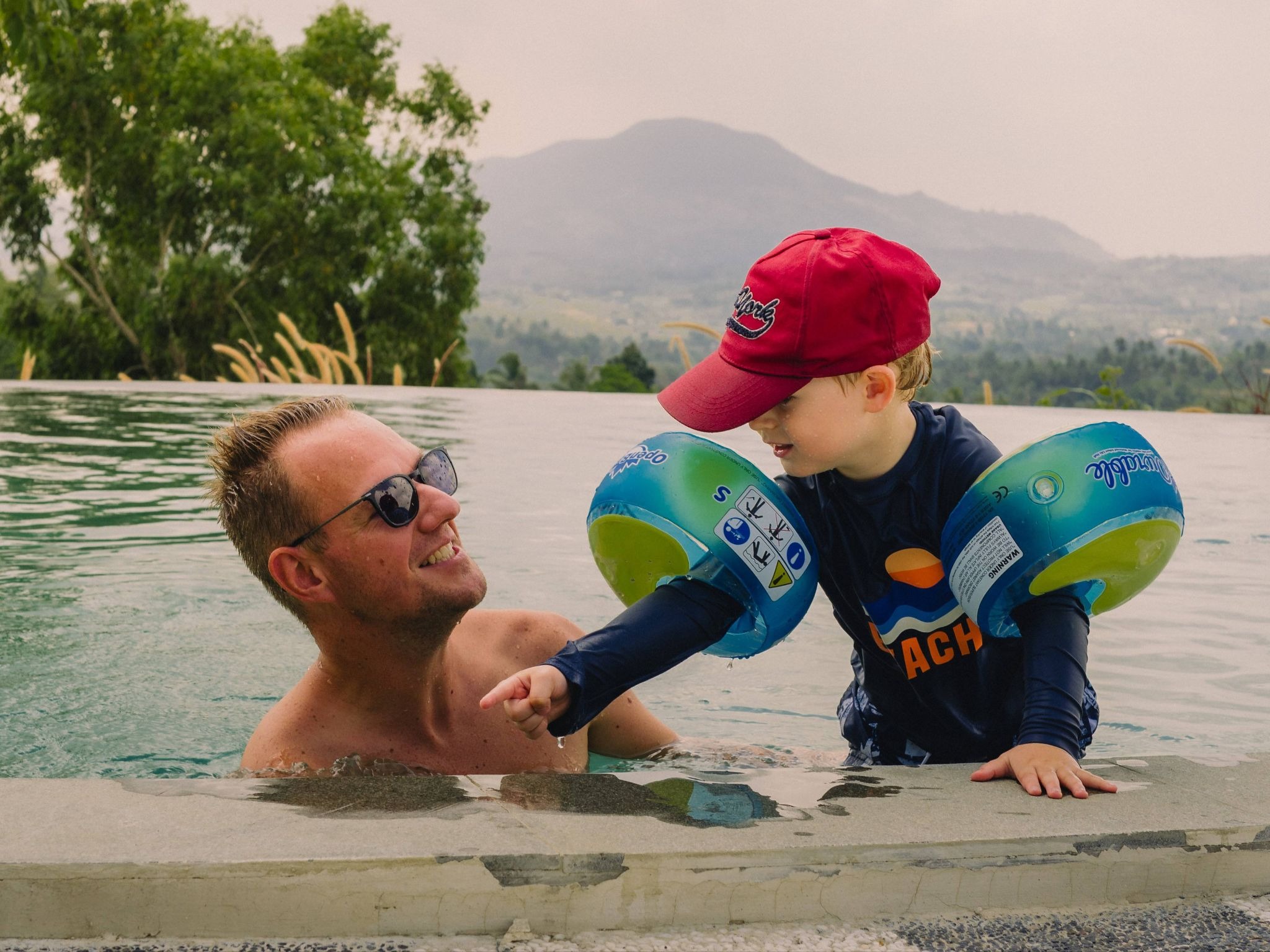
Family travel often becomes easier when there is less pressure to see everything.
Lombok rewards this approach. A morning at the beach can be followed by lunch, a long drive through the countryside, and an afternoon spent doing very little. There is no need to fill every hour.
This is also where staying somewhere connected to the landscape becomes important.
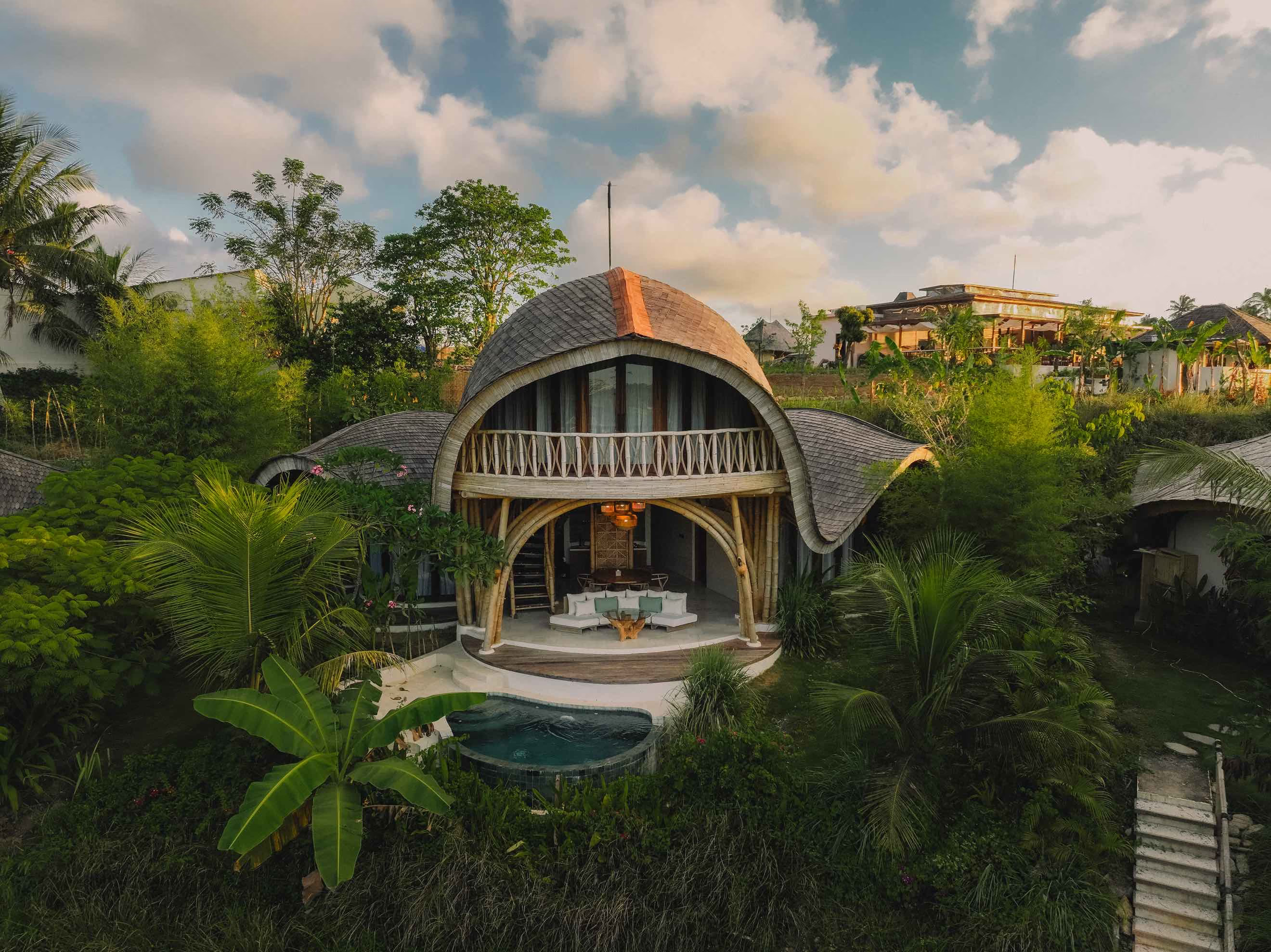
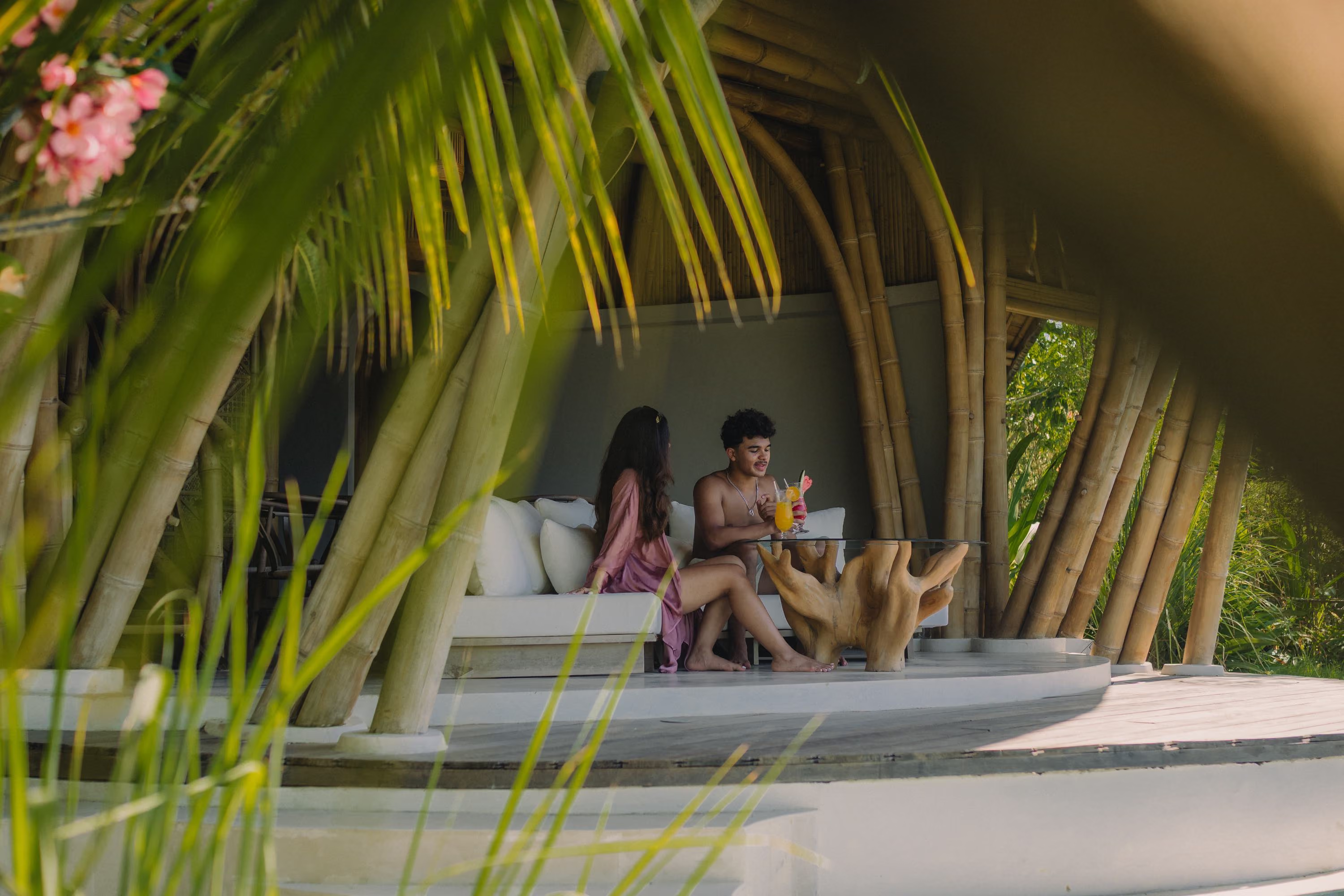
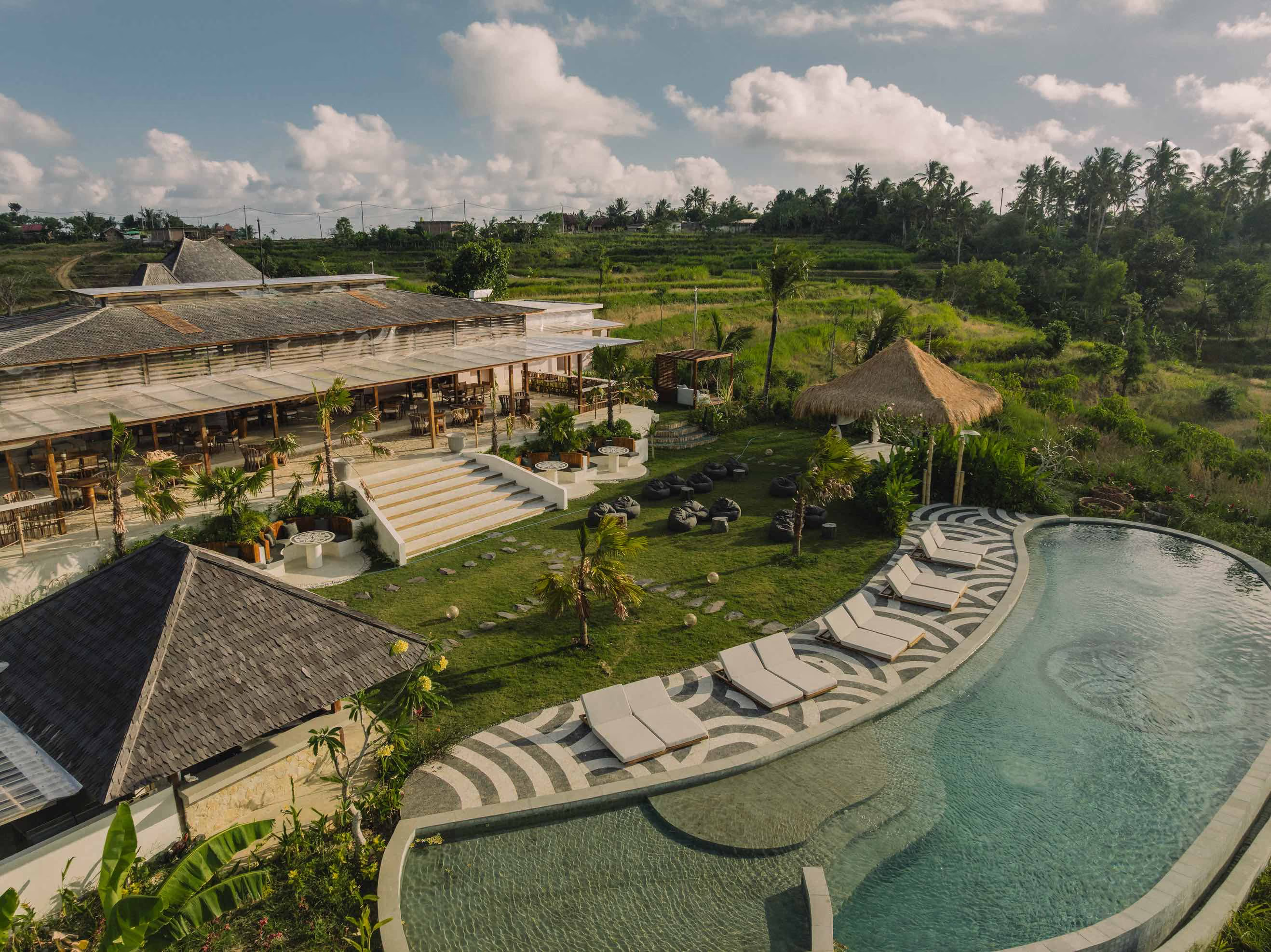
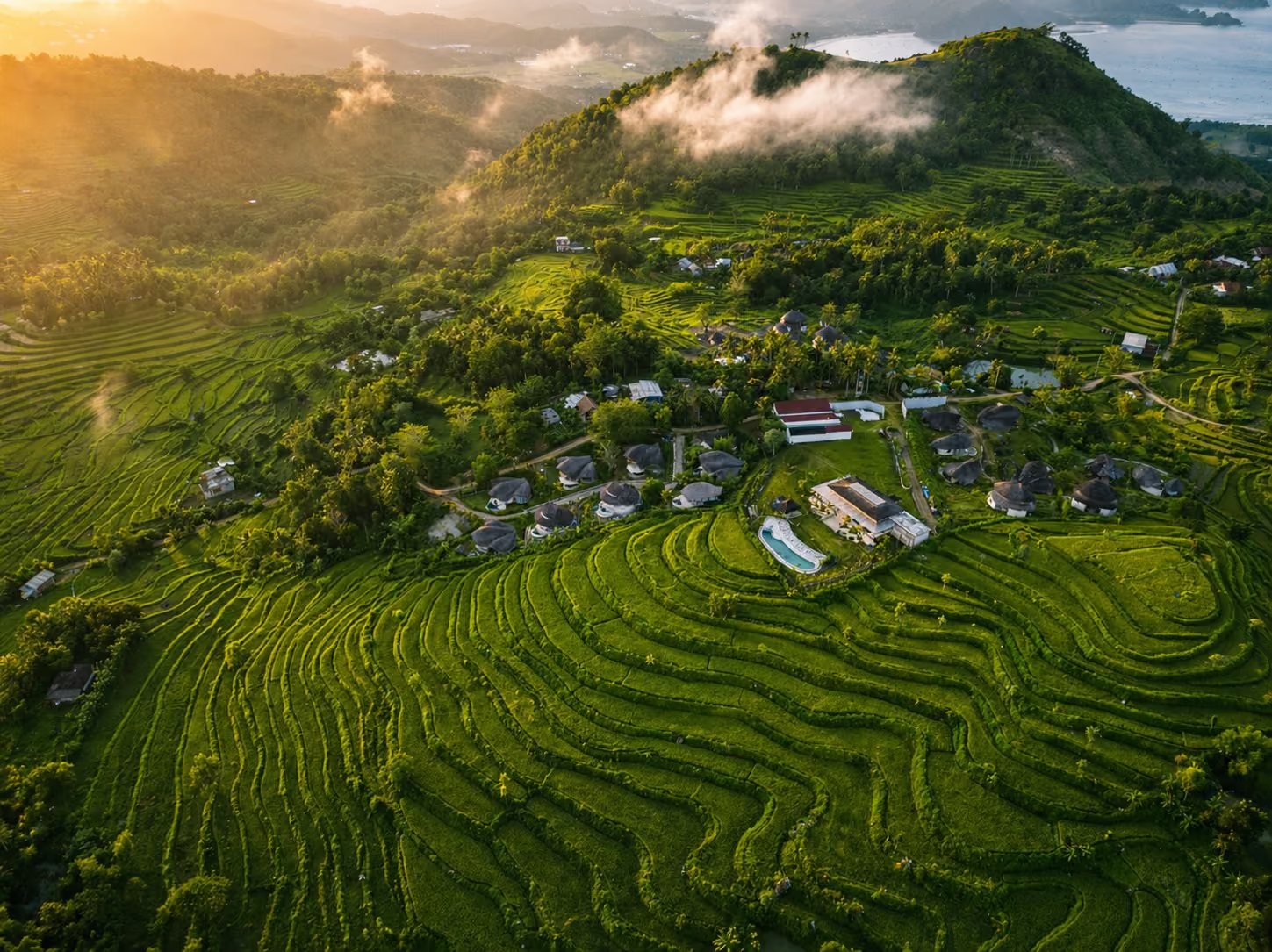
At Mandala, the architecture is deliberately open to its surroundings. Natural materials, bamboo structures, shaded spaces and views toward the landscape create an environment where being outside does not necessarily require leaving the property. The transition between indoor and outdoor space becomes part of everyday life: breakfast can stretch into the morning, a swim can become an afternoon, and the landscape remains present even when there is nowhere particular to go.
For families, that matters.
Children need room to move, but they also need periods without stimulation. Parents often need the same thing. A slower holiday can be less about finding more activities and more about creating enough space between them.
The island's climate and landscape naturally encourage this rhythm. Morning is often the time for movement: swimming, surfing, walking or exploring. The hotter part of the day can be spent in shade. Later, as the light softens, the family can head back outside.
It is a simple rhythm, but one that is increasingly difficult to find in everyday life.
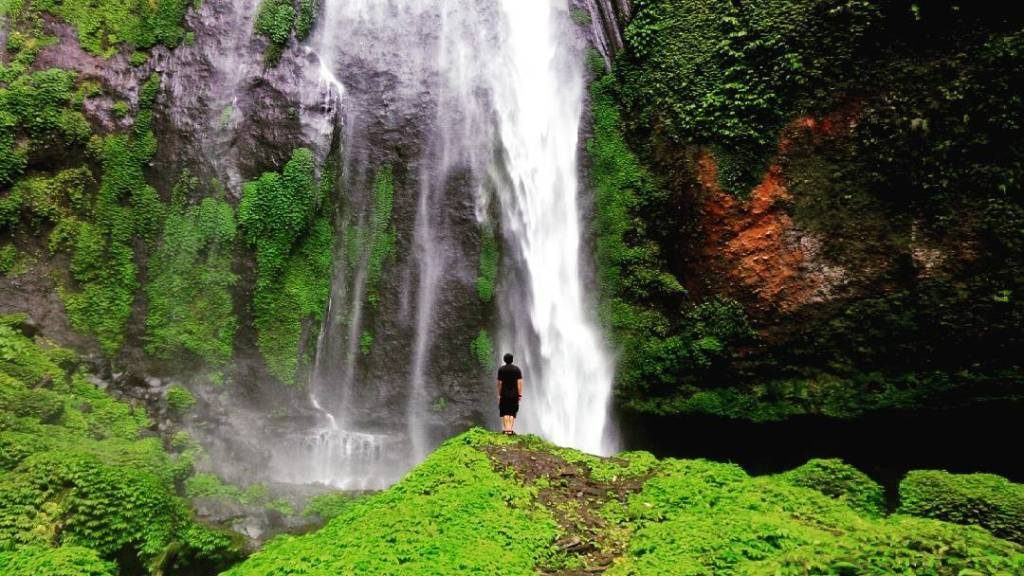
Waterfalls and the Green North
If the south is defined by the ocean, the northern foothills of Rinjani offer a completely different experience.
The landscape changes as you move inland and north. Roads begin to wind through villages and agricultural areas, vegetation becomes denser, and the sound of water becomes more common.
Around Senaru, Sendang Gile and Tiu Kelep are among Lombok's best-known waterfalls. They are accessible without undertaking a full Rinjani expedition, making them a useful option for families who want a taste of the mountain landscape without committing to a multi-day trek.
The experience is different from simply visiting a viewpoint.
There is a physical journey involved: walking through forest, following paths, listening to water and gradually moving deeper into the landscape. For children, that journey can become as memorable as the waterfall itself. There are leaves to inspect, rocks to climb carefully, insects to discover and streams to cross.
It is also a useful reminder that Lombok's natural attractions are not isolated postcard locations. They are part of a larger ecological landscape connected to forests, rivers, agriculture and communities.
That connection is worth paying attention to.
A waterfall is not simply somewhere to swim. It exists because of the mountain landscape above it and the water systems that carry rainfall through the island. The same landscape supports farms, villages and ecosystems further downstream.
For visitors, moving through these places responsibly is part of the experience. Staying on established paths, taking waste home and respecting local guidance may seem small, but collectively these habits help protect the environments that make Lombok worth visiting in the first place.
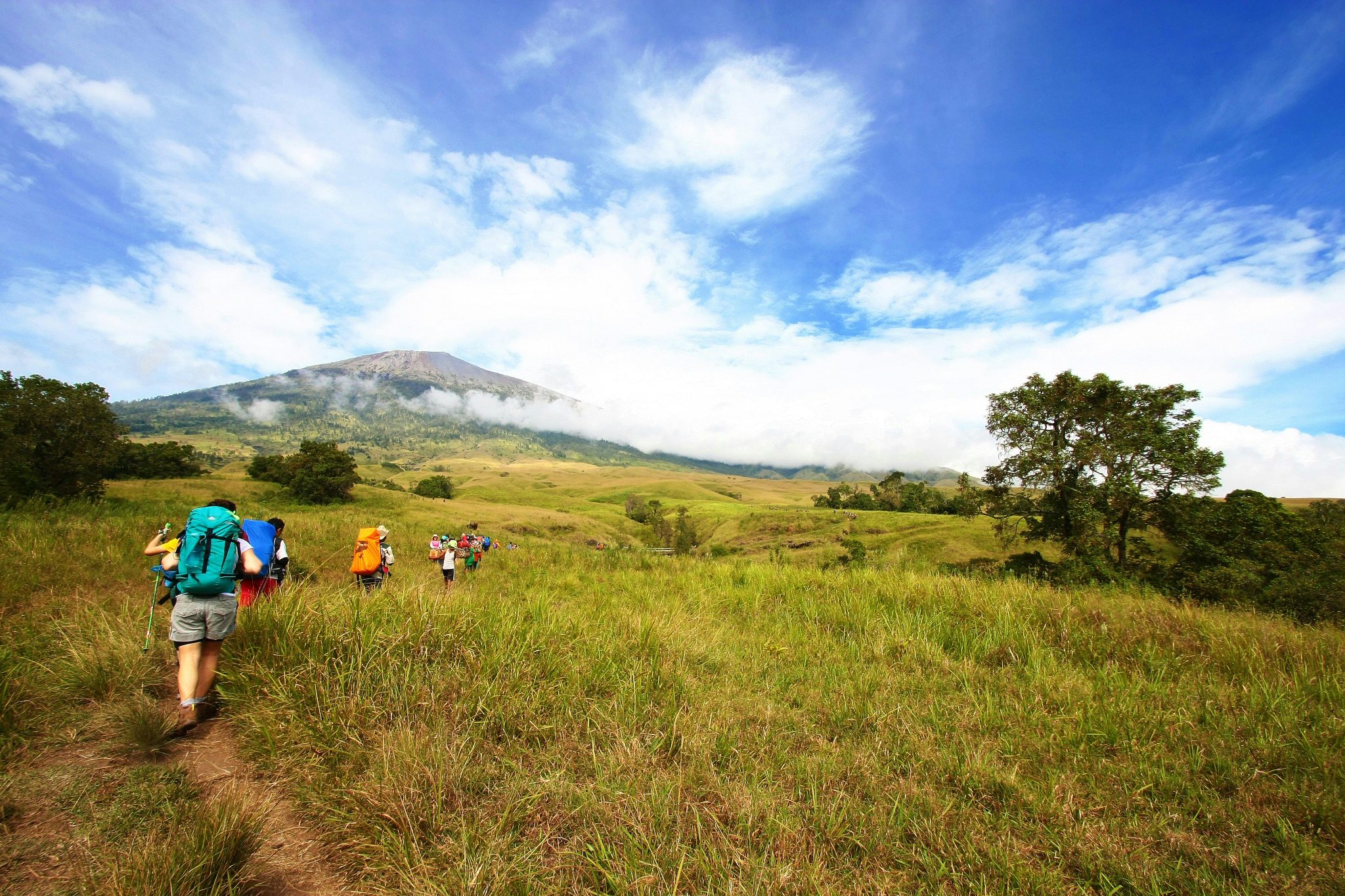
Hiking Does Not Have to Mean Conquering a Mountain
Mount Rinjani dominates Lombok's geography, but families do not need to climb to its summit to experience the mountain.
At 3,726 metres, Rinjani is Indonesia's second-highest volcano, and its established trekking routes are serious multi-day journeys. The Sembalun route is known for open savannah landscapes, while the Senaru route moves through denser forest and steeper terrain.
For families travelling with younger children, shorter walks around the foothills can offer a better experience.
The goal does not have to be reaching a particular altitude or viewpoint. It can simply be walking through rice fields, visiting a village, following a forest trail or finding a quiet place to look back at the mountain.
This distinction is important because travelling with children often encourages us to redefine what an adventure means.
A successful hike might be two hours rather than two days. It might end with everyone eating lunch together rather than reaching a summit. The value comes from experiencing the landscape together rather than measuring the day by distance.
Rinjani is also part of a wider cultural landscape. The UNESCO-listed Rinjani-Lombok Geopark brings together geology, biodiversity and Sasak culture, reflecting the fact that the mountain is not simply a natural landmark but part of the island's living identity.
For children especially, this can make a walk more meaningful. They begin to understand that landscapes are not empty spaces. People live with them, work around them, protect them and attach stories and traditions to them.
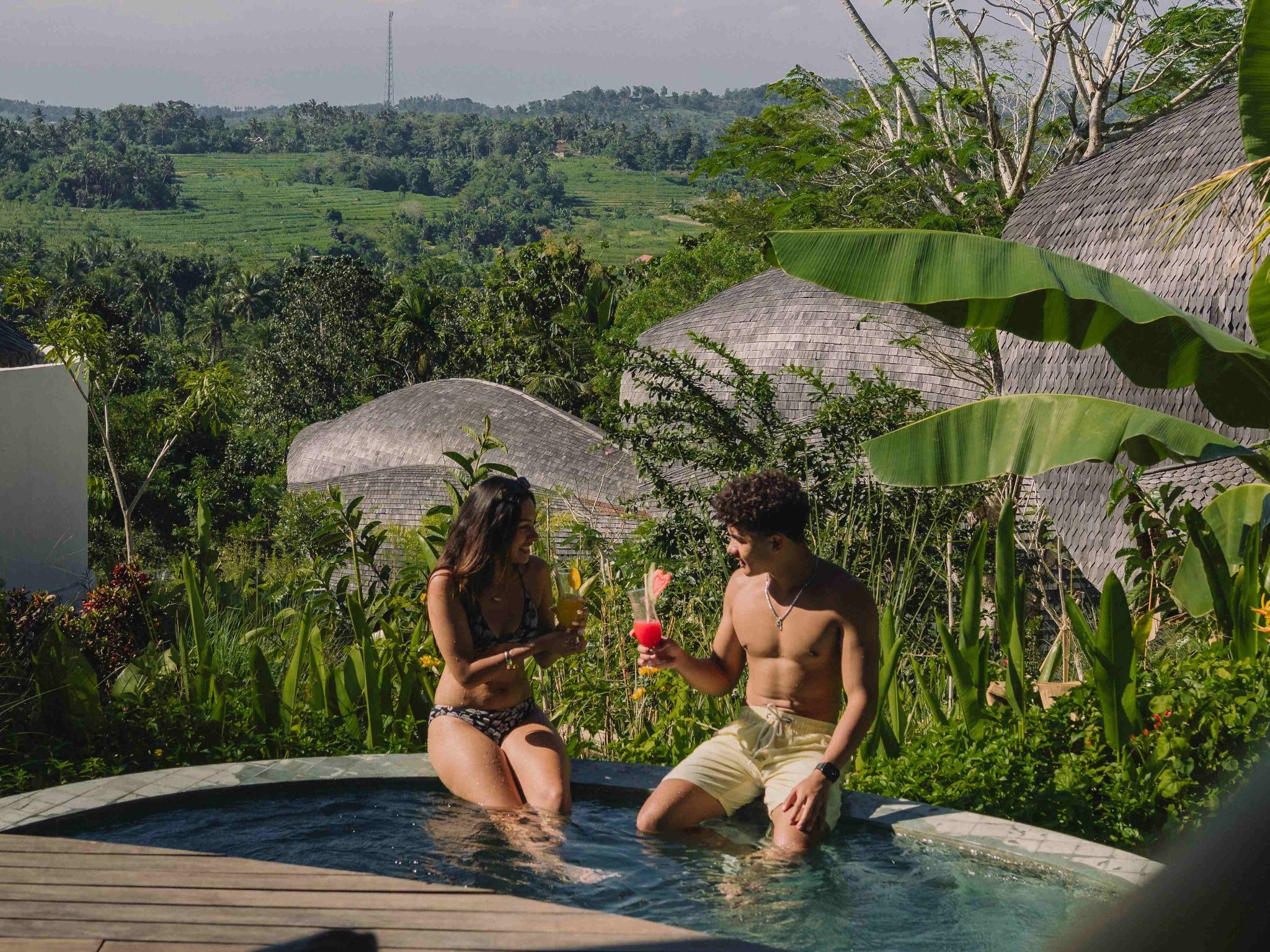
A Different Kind of Family Holiday
The appeal of Lombok for families is not that it offers an endless catalogue of things to do.
It is almost the opposite.
The island gives you enough variety to make each day feel different, while its landscapes encourage you to slow down between activities. One day can be spent learning to surf. The next can be a waterfall walk. Another might involve a village visit, a long lunch and an early night.
The spaces in between are just as important.
At Mandala, the architecture is designed around this idea of living with the landscape rather than shutting it out. Bamboo, natural textures, planting, shaded outdoor areas and views toward the surrounding terrain create a setting that supports a slower rhythm. The resort becomes less of a destination in itself and more of a base from which the island can be experienced.
That distinction is particularly valuable for family travel.
A good family holiday does not need to be spectacular every day. In fact, the moments remembered years later are often much smaller: a child standing up on a surfboard for the first time, everyone getting soaked on the walk back from a waterfall, stopping for coconut water after a long drive, or sitting together outside as the light disappears over the hills.
Lombok has a way of making space for those moments.
Perhaps that is what makes it such a rewarding family destination. The island offers adventure without demanding that every day become an expedition. It offers nature without requiring visitors to stand at the edge of it. And it allows families to discover that travelling well is sometimes less about how much you manage to see, and more about how much time you give yourselves to notice where you are.
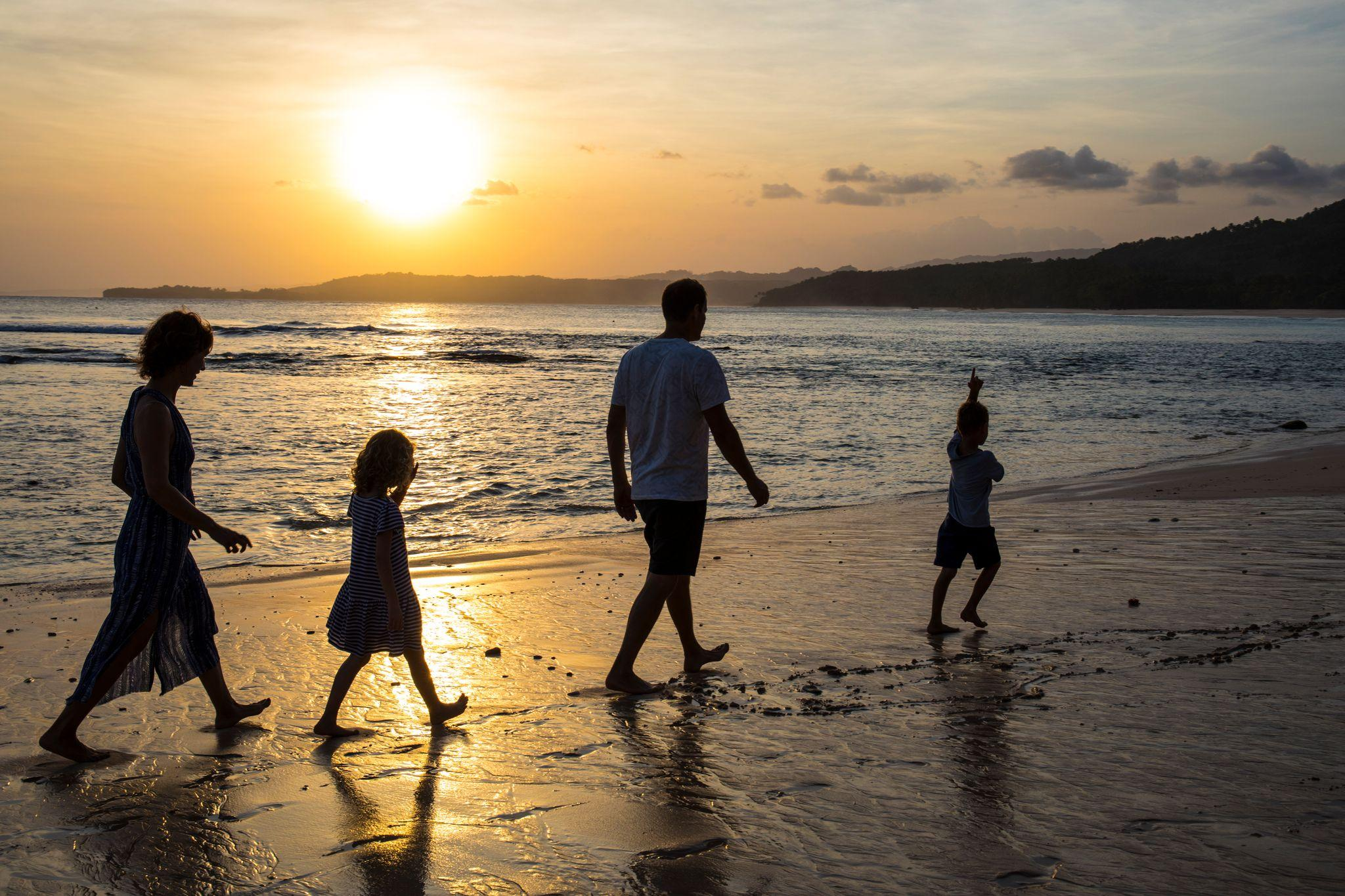
A Slower Way to Explore Lombok
For a family visiting Lombok, the most rewarding itinerary may be the one with the fewest fixed plans.
Choose a beach. Learn something new. Walk through the forest. Swim beneath a waterfall. Stop when the children are tired. Stay longer when everyone is enjoying themselves.
Then come back to a place where the day does not have to end when the excursion does.
Lombok's landscapes are varied enough to fill weeks, but they are best experienced slowly. The coast, the mountains, the forests and the villages are not separate attractions; together they form the character of the island.
And for families, that may be the greatest luxury of all: having enough time to experience them together.